
Lee County Wanted List Access
The sheriff's publicity effort lives on the LCSO Top Fugitives page. It is selective by design. Tips route through Southwest Florida Crime Stoppers. The page makes no promise of showing every Lee County warrant out there. Entries shift as warrants get served, recalled, restricted, or newly cleared for release. No fixed count or update schedule exists.
A linked regional wanted interface goes further. It shows people sought by Lee County and nearby agencies alike. Photographs and identifying details stay on that source page. An entry only shows that an agency wanted public help at the time of posting, and the warrant behind it may or may not still stand.
Safety: Never approach, chase, detain, or name a person online just because a page lists them as wanted. Pass along what you know through an official tip channel instead.
Lee Wanted Listing Fields
Southwest Florida Crime Stoppers publishes the fields that matter most. Read the written details first. Compare name, age, and any other identifiers before you lean on a photo. Photos can sit on file for years. A face alone proves little about who you are looking at.
| Field | What it means |
|---|---|
| Name and photograph | The identity and image supplied for public notice. |
| Wanted-by agency | The agency that submitted or owns the notice. |
| Alleged charge or warrant | The stated basis for seeking the person, not a conviction. |
| Wanted-as-of date | The notice's time reference, not a live-status guarantee. |
| Tip route | The approved way to send information without approaching. |
A wanted entry and a jail record are not the same. Deputies may make an arrest and move the person into county custody. When that happens, a booking entry may appear in the Lee County arrest and mugshot search. The Clerk's office then tracks what the court files.
Use Lee Wanted Notices Safely
Wanted publicity exists to push information toward the people who can act on it. The regional list covers more ground than Lee County alone, so check the wanted-by field and the date before you send anything. And never assume the card that looks closest is the right person. Names repeat. Details sort them out.
- Open the LCSO Top Fugitives or Southwest Florida Crime Stoppers wanted source.
- Read the full entry, including the wanted-by agency and wanted-as-of date.
- Compare a known name or other text detail. Do not rely on face matching.
- Do not contact the listed person or travel to a suspected location.
- Send a tip through 1-800-780-TIPS, P3Tips, or the official LCSO app.
- Call 911 only when there is an immediate danger or active emergency.
The official Crime Stoppers landing page documents the regional tip path.
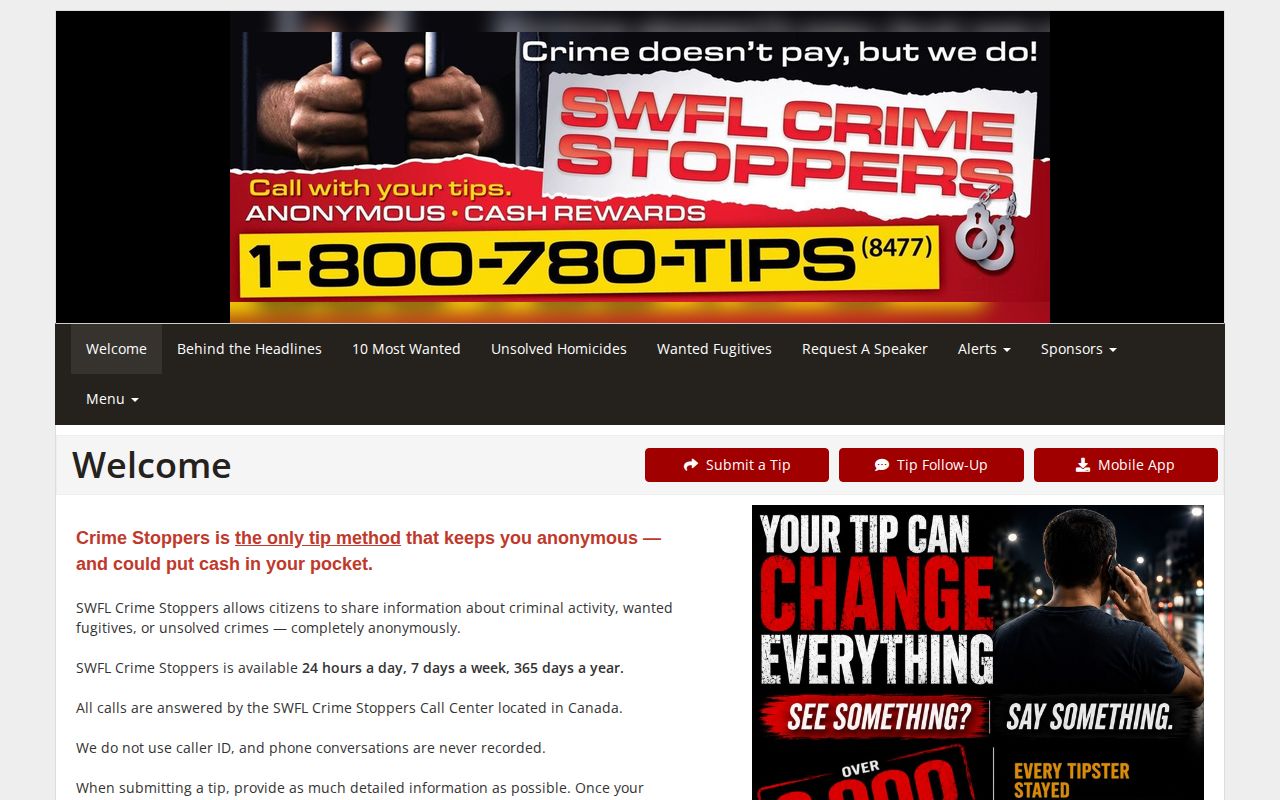
The list exists to gather tips, not to serve as a full county warrant inventory.
Lee County Crime Stoppers Tips
Southwest Florida Crime Stoppers accepts tips at 1-800-780-TIPS (8477) and through P3Tips. LCSO also identifies its official app as a tip route. The sheriff says anonymity is available, and a tip that produces an arrest may qualify for a cash reward. “May qualify” matters because no reward should be promised before the program applies its rules.
Southwest Florida Crime Stoppers
Tip line: 1-800-780-TIPS (8477)
Digital route: P3Tips
Coverage: Regional, including Lee County submissions
Emergency: Call 911 for immediate danger
Crime Stoppers and the LCSO Warrants Unit do different jobs. One collects leads from the public. The other gives agency-level guidance on Lee process. Neither one wants a private citizen trying to make an arrest.
Check Lee County Warrants
Lee County has no separate public LCSO portal for warrants. Start with the FDLE Public Access System instead. You can search by name, nickname, race, sex, date of birth, or age. A CAPTCHA check guards the page. FDLE cautions that each agency decides what gets reported and released. Treat any result as a lead. The issuing record confirms whether a warrant is truly active.
- Search FDLE PAS with the most exact identity facts available.
- Read the submitting agency and identifiers, not just a name.
- Call the LCSO Warrants Unit at 239-477-1269 for agency guidance when Lee process is involved.
- Check Lee Clerk Matrix for a public court event, recognizing that some matters are delayed or restricted.
- If the warrant may concern you, contact a lawyer or the issuing court to confirm and arrange a lawful response.
The official FDLE search form makes its statewide, agency-reported scope clear.
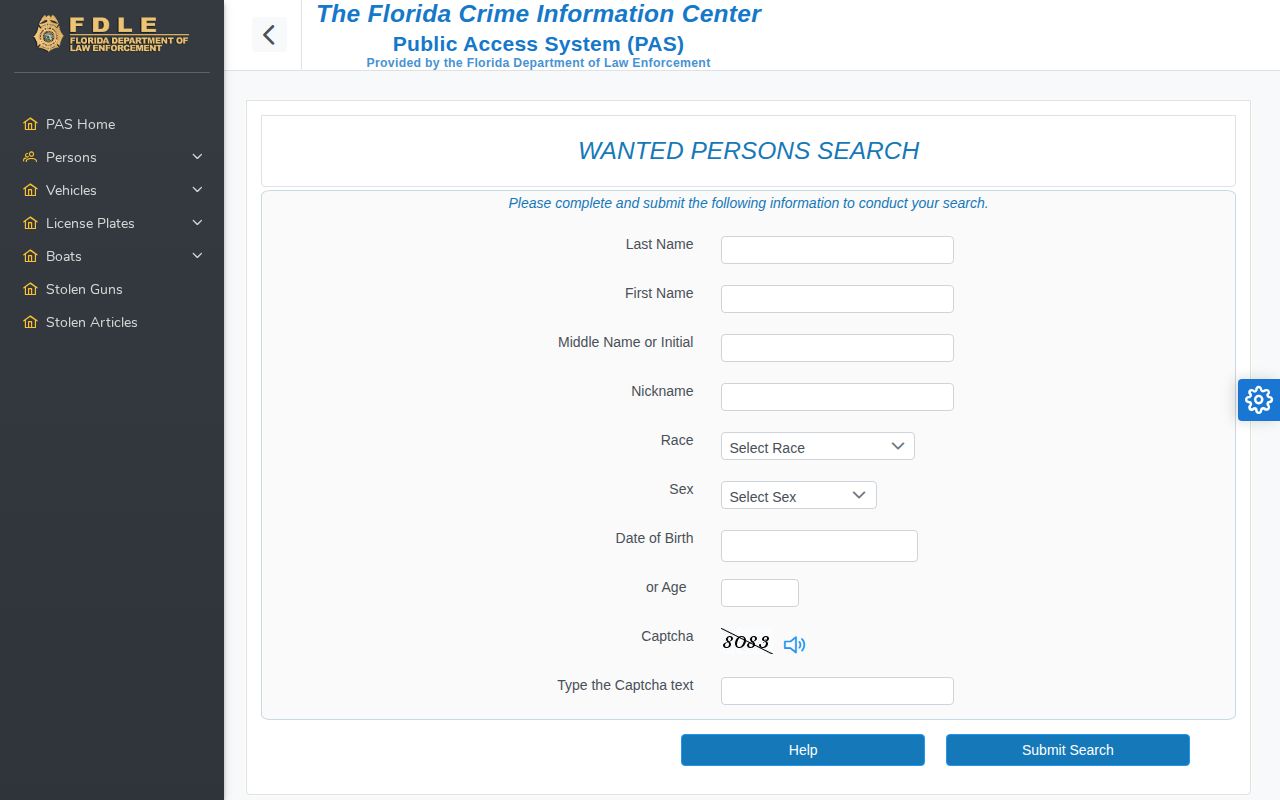
A blank FDLE PAS result does not mean nothing exists. Restricted, brand new, recalled, served, or simply unreported process can all stay out of view.
Lee Warrant Types and Sources
Function is the cleanest way to tell these apart. A warrant directs law enforcement to act under court authority. A wanted notice works differently. It asks the public for help finding selected people. Public sites may toss around labels like arrest warrant or bench warrant. The issuing record is what controls.
| Item | What starts it | Best confirmation |
|---|---|---|
| Arrest warrant | Judicial process tied to an alleged offense | Issuing agency, court, or counsel |
| Bench warrant | Court process often tied to a missed requirement | Issuing court and docket |
| Wanted publicity notice | Agency selection for public assistance | The submitting agency and current notice |
| FDLE PAS result | Agency-authorized statewide reporting | The reporting agency, not the web hit alone |
A Lee Clerk docket can reveal a judicial event. Still, online access rarely shows every record. Page status can also trail behind what has happened since. Confirm with the institution that owns the process.
Regional List Versus Lee Warrants
Lee's public wanted system runs on a regional platform. FDLE PAS covers the whole state. Picture three stacked layers: publicity first, then a database lead, then confirmation from a court or agency. The regional list can carry entries from several counties at once. FDLE may return an even wider set from participating agencies. Neither layer replaces a check of the current issuing record.
Timing causes most of the confusion. A wanted card can linger after a warrant has been served. A fresh warrant may not have surfaced yet. Restricted records may never appear at all. Compare dates and reporting agencies, then contact the source directly. A missing card does not mean clearance, and a visible card gives no civilian the authority to act.
Need the right office? LCSO's Unit Directory lists the Warrants Unit, Central Records, non-emergency service, and Crime Stoppers. The directory screenshot below shows those separate routes. A listing helps you reach the correct office. It does not mean staff will resolve a warrant by phone or share restricted process.
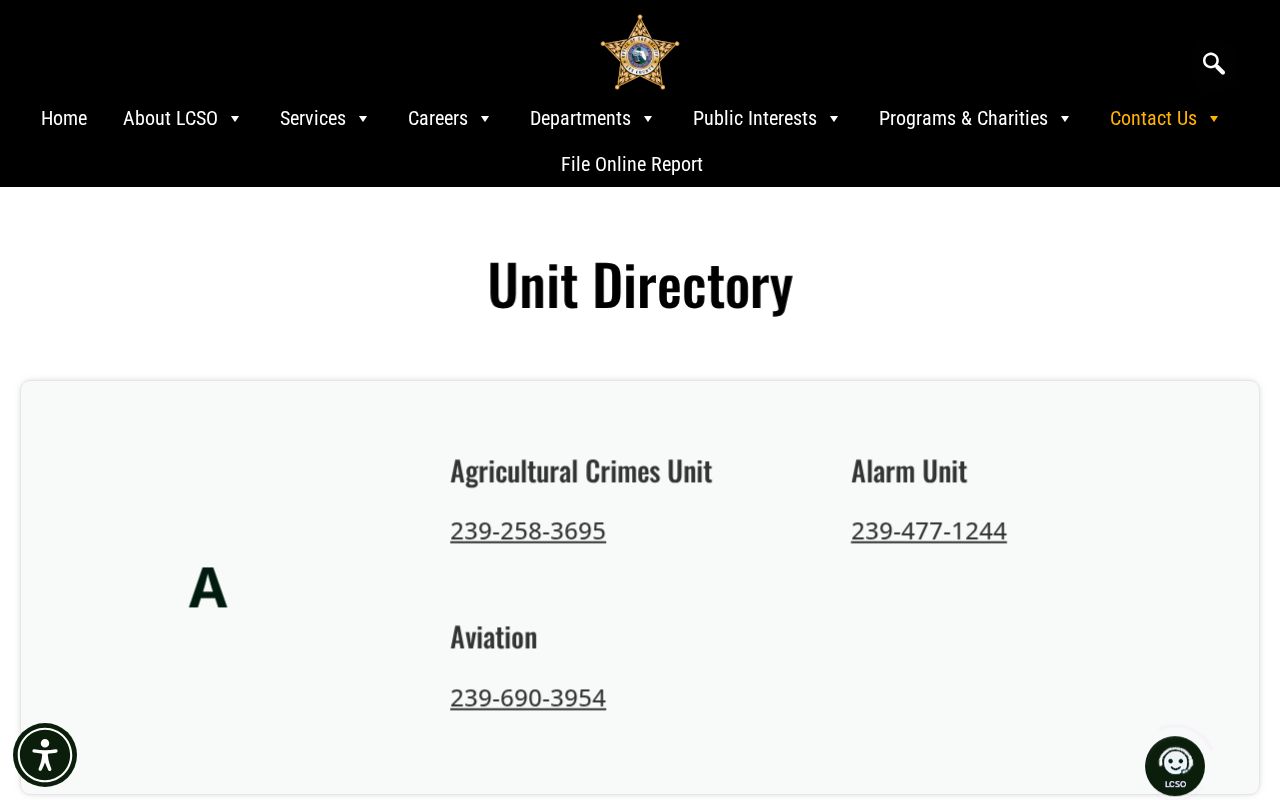
Use the purpose-matched line and keep court confirmation separate from public tip reporting.
Note: A name match is never enough; use dates of birth, agency names, case numbers, and other text identifiers before reporting a lead.
Lee Sheriff App and Alerts
Florida agencies have gone mobile. The Lee County Sheriff app bundles an arrest search, local news, traffic alerts, crime mapping, and links to social feeds, plus an official way to send tips. Fort Myers Police relies on Atlas One, a similar tool that pulls together public records, Arrested Person Search, Warrant Search, incidents near you, and alerts tied to your location. Neither listing promises a complete picture, though. Some wanted or warrant records stay out, and plenty of entries come with no photograph attached.
Social media posts are worth a glance, too. Deputies and Crime Stoppers share selected wanted notices there. Treat those accounts as a broadcast channel rather than a real database. Screenshots travel far and can hang around long after the person behind them has been caught or cleared. When a post or app surfaces a name you care about, go back to the agency or the court and confirm what is true right now.
Why Lee Warrant Results Change
Warrant data shifts constantly. A judge signs a warrant. A deputy serves it. A court recalls it. Public databases lag behind all of that. Agencies also hold back records they lack authority to release, so a restricted warrant may never show up in FDLE PAS at all, while a fresh one might take days to appear. That is why FDLE itself warns users not to read a web result as proof a warrant is still active.
Publicity is selective on top of that. LCSO and Crime Stoppers pick which cases to push. An absent name can still have an active warrant. A featured name can vanish overnight. The regional list even includes people wanted by departments outside Lee County. Always read the wanted-by field before you assume which office is handling the case.
What happens when a public card and a court docket clash? Compare dates, case numbers, and the reporting agency first. A docket can show a warrant event yet leave supporting documents out of view. The LCSO Warrants Unit offers agency guidance. The issuing court keeps the judicial record. Central Records handles records requests, but it cannot override the court's own current instructions.
Resolve a Lee Warrant Lawfully
Think a warrant might have your name on it? Do not exploit gaps in online listings to dodge the issue. A lawyer can help. The lawyer can confirm which court issued it, pull the public docket, walk you through the process, and arrange a lawful appearance or surrender. The court or agency will supply current procedure. That path leads to resolution instead of a stale web result.
Skip the shortcuts, too. A friend, an aggregator site, or a social post cannot declare a warrant dead. Never travel to confront someone named in a result. If the whole thing looks like an identity mix-up, save the exact record and identifiers, then call the reporting agency. Recalled warrants and case outcomes belong in the record that created them. Check there.
A booking in the sheriff's Arrest Search does not mean every warrant was settled. Verify with the court file and the responsible agency. A release, likewise, only signals that county custody ended at the reported time. It says nothing about why the person walked out or where the case stands today.
Public Record Search
Sponsored Results